Assassin's Creed Unity Is a Vision of What Could Have Been - The Notice Board
Welcome to the An Evening at the Inn's Notice Board, the place where I'll be posting little side quests and blog-y thoughts. This will be a separate way for me to write about RPGs outside of the newsletter, and as such, will tend to be shorter (or not in this case), more focused pieces.
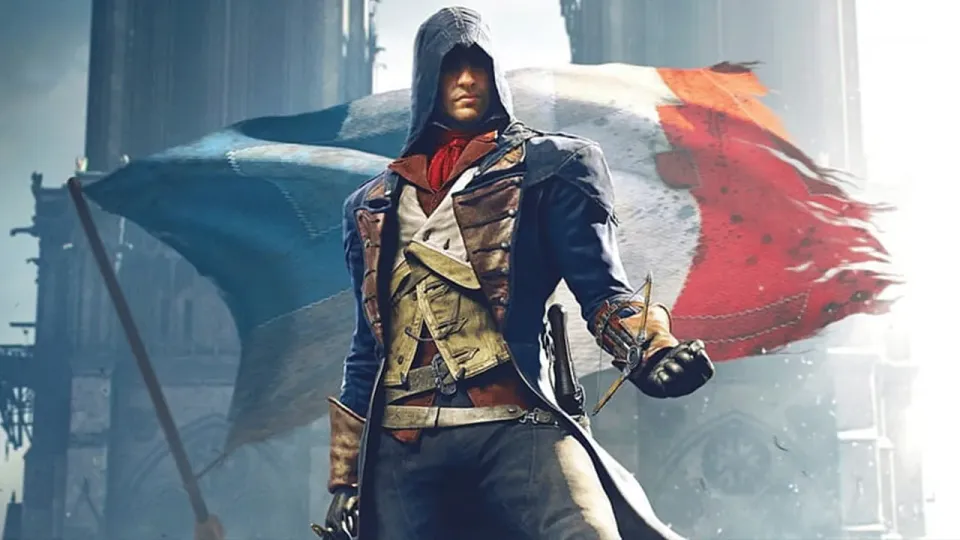
Assassin's Creed Unity got a shiny new 60fps patch this week, and it makes an already visually stunning game run like a dream. But it also presented a prime opportunity for me to return to Unity – a game that I think is criminally overlooked in almost every way. And perhaps more crucially, the game I wish had informed the future of the franchise. Unity is the peak of Assassin's Creed before the pivot to RPGs, a game that impeccably captures the core tenets of the franchise, from the historical playground approach to the themes of freedom and liberty. And in a different world, one where Unity wasn't rushed to release in a broken state, I enviuously think of what more we could have had.
There's so much about Unity that I adore. And while I like Syndicate and Origins overall, to me, Unity is the last game in the franchise that had a sort of special sauce – a focus and personality that I wish the franchise could return to.
I know there are a lot of issues and quibbles you can have with Unity, many of which are justified. Yes, its story, while having great characters, is convoluted and poorly paced. It has bizarrely implemented co-op and social elements. And, of course, it was an absolute technical mess upon launch. There are elements of Unity that feel cut short, clearly rushed along to meet the game's development timeline. So an overarching promise of what "could have been" lies over the game, but once those technical issues were cleaned up, there's something truly compelling at the heart of Unity.
And the two core ideas that the game embraces, which have always defined Assassin's Creed, are world design and character.
Unity is, fittingly, a bit of a variation on the classic Romeo and Juliet structure, focusing on Arno Victor Dorian, the son of a prominent Assassin, and Elise de la Serre, the daughter of a Templar Grandmaster. These two pining lovers become embroiled in the endless struggle between their two factions, which in the era of the French Revolution (roughly 1789), has become surprisingly bureaucratic.
But what's most interesting about Arno and Elise is how they mirror characters of Assassin's Creed's past. Unity was intended as something of a soft reboot for the series, which is why Arno's personality and arc bear some striking resemblances to Ezio. Both are idealistic young noblemen who dream of romance, forced to join the Assassins against their will and take on the creed after a great tragedy. But where Ezio accepts his duty and the Assassin's legacy, Arno defiantly shirks it. And that's really where his character shines.
I've seen Arno described as a "pathetic wet dog of a man," and I think that's an apt descriptor. The reason Arno is so interesting is because of how much he differentiates himself from Ezio, even though he's the same archetype. Yes, Arno has charm, but he's also pathetic, endearingly so. He constantly clashes with the Brotherhood and seemingly everyone else around him.
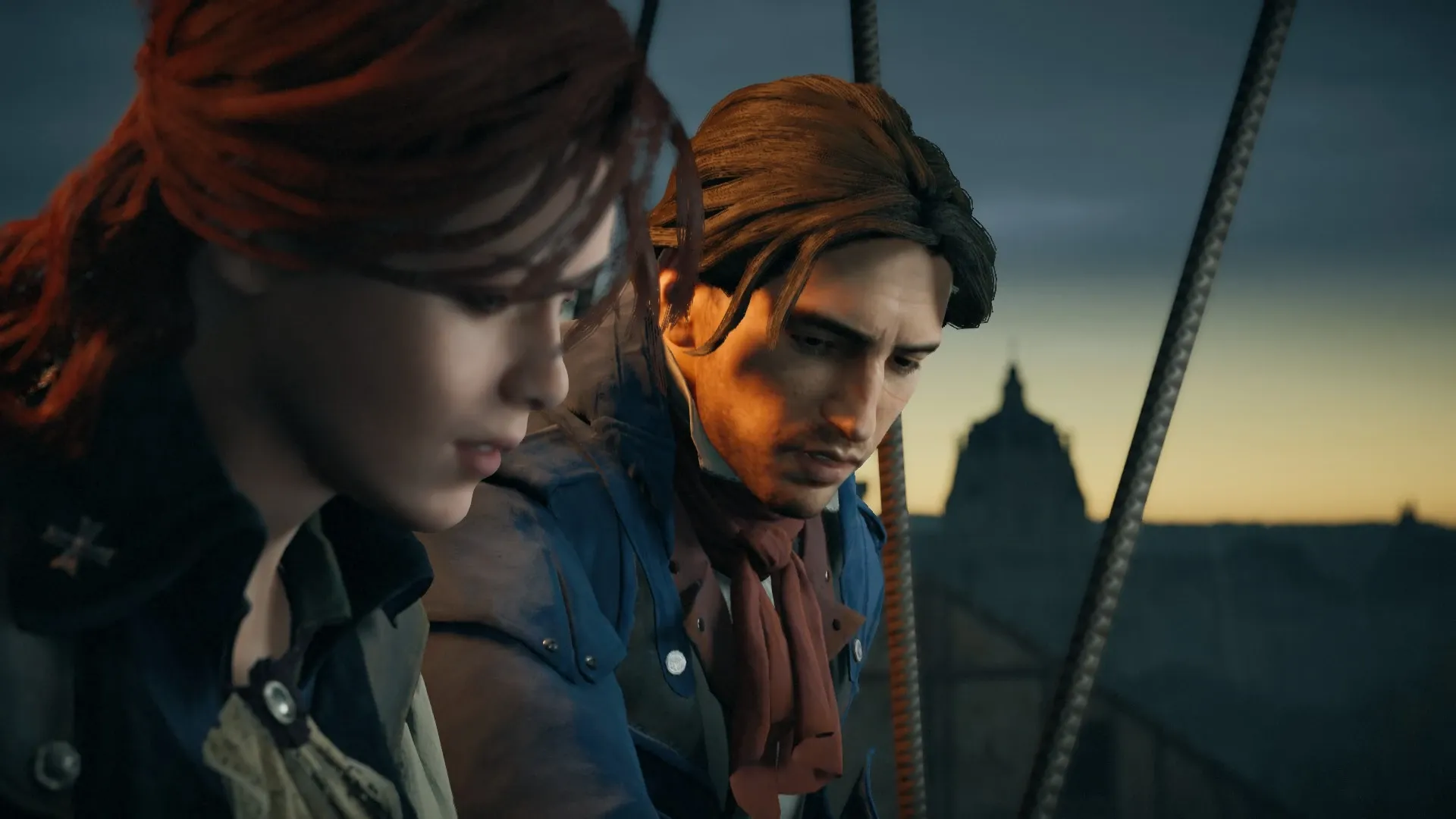
And Arno being unlikable is perfectly fine, even intentional to a degree. It's okay for a game to have a hero who's not something to aspire to. This is a game set in the French Revolution, and Arno, despite his circumstances, is still a part of the bourgeoisie, who have lived a mostly sheltered life. He cares little for the Brotherhood's goals or the overall plight of the people – he wants what he wants, Elise. Arno does have a character arc where he begins to break outside of his shell, but his sole motivation is that central romance; he hopelessly follows his heart, even when his brain tells him not to. This plays into the Romeo and Juliet theming of the story, but also makes him feel like one of the more human protagonists of the franchise. Arno is easy to anger, impulsive, and hopelessly romantic, right up until the end. Elise has a similar arc, but her priority is squarely on revenge, with Arno coming in second. The drama of the game is that not only do each of their goals clash against their respective organizations, but with each other.
There's a simplicity to his story that's beautiful. Even as Unity brings in much of the series' absurd lore, it makes sure the narrative focus is always on Arno and Elise – exploring the time period and upheaval of the French Revolution through the lens of their standings as nobles and their relationship. Every game since Unity has gotten bogged down by loads of secret organizations, and the RPG era has quite strongly moved away from the Assassin-Templar conflict. I largely think all of those things have been a mistake, as Assassin's Creed has always been at its best when it's highly character-driven, and the lore is molded around those personal stories. That's where Unity shines.
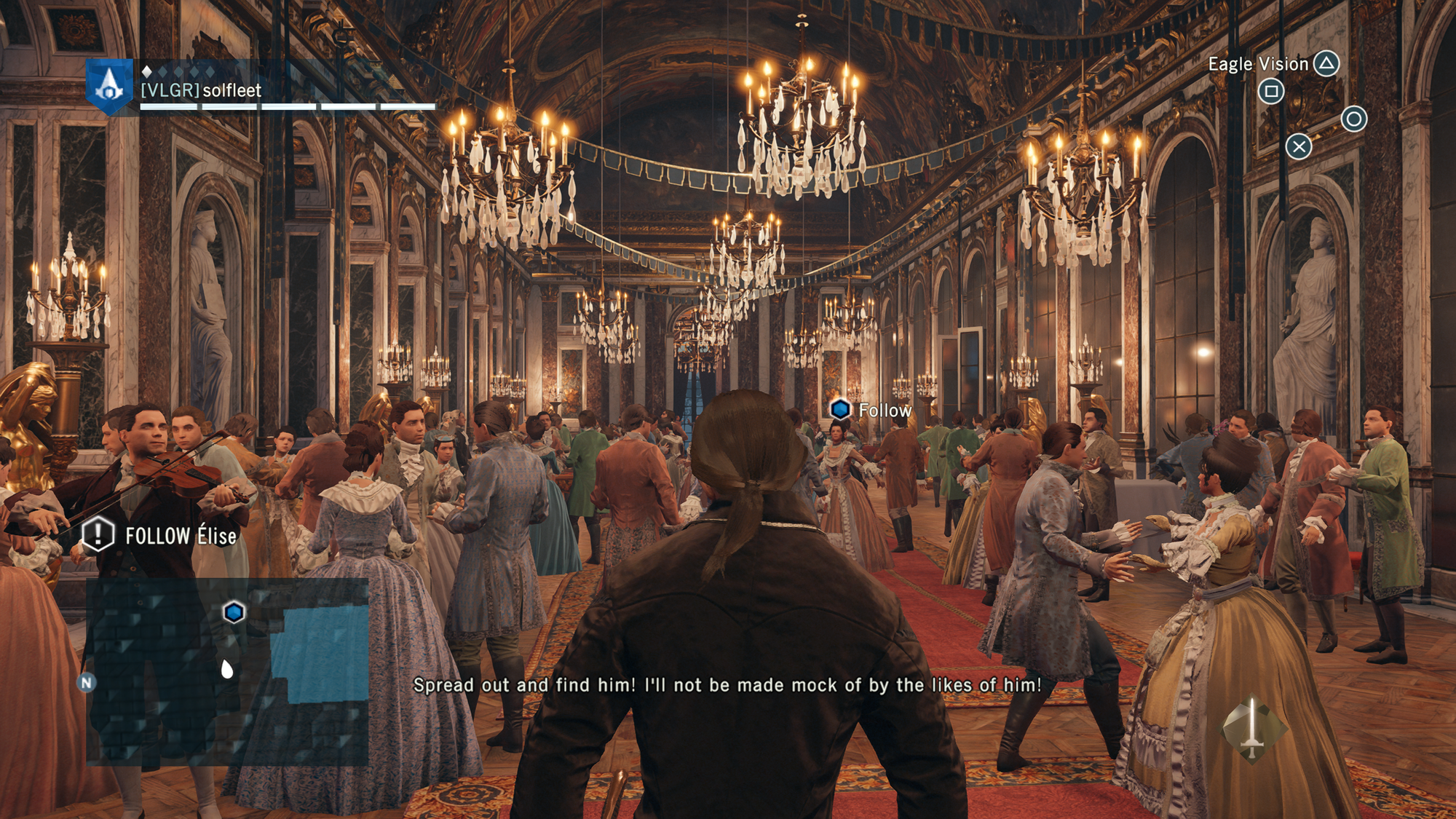
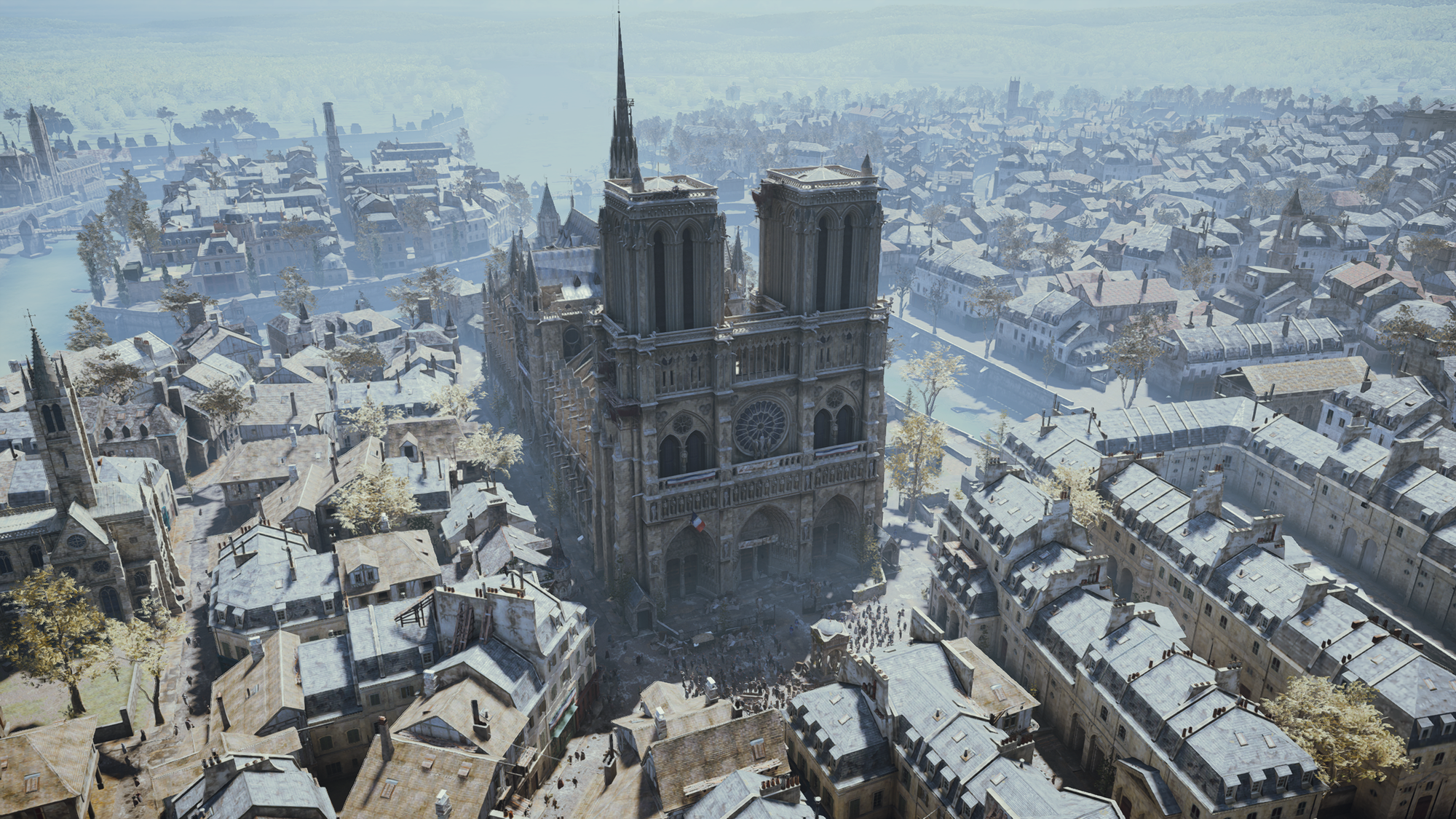
But the other crucial aspect here is the setting itself, just as much of a character as Arno. Much like those narrative aspects, I think the biggest strength of Paris is how focused and dense it is. Sure, there are hundreds of icons on your map, but the city itself is one of the most compact settings the series has seen. There's something to find or do on nearly every street and corner, from treasures to assassination missions, collectibles, etc. This, of course, was standard for the series at the time, but the way Unity doles out its sense of reward is particularly fascinating, bread-crumbing story content, historical context, tangible equipment rewards, and more.
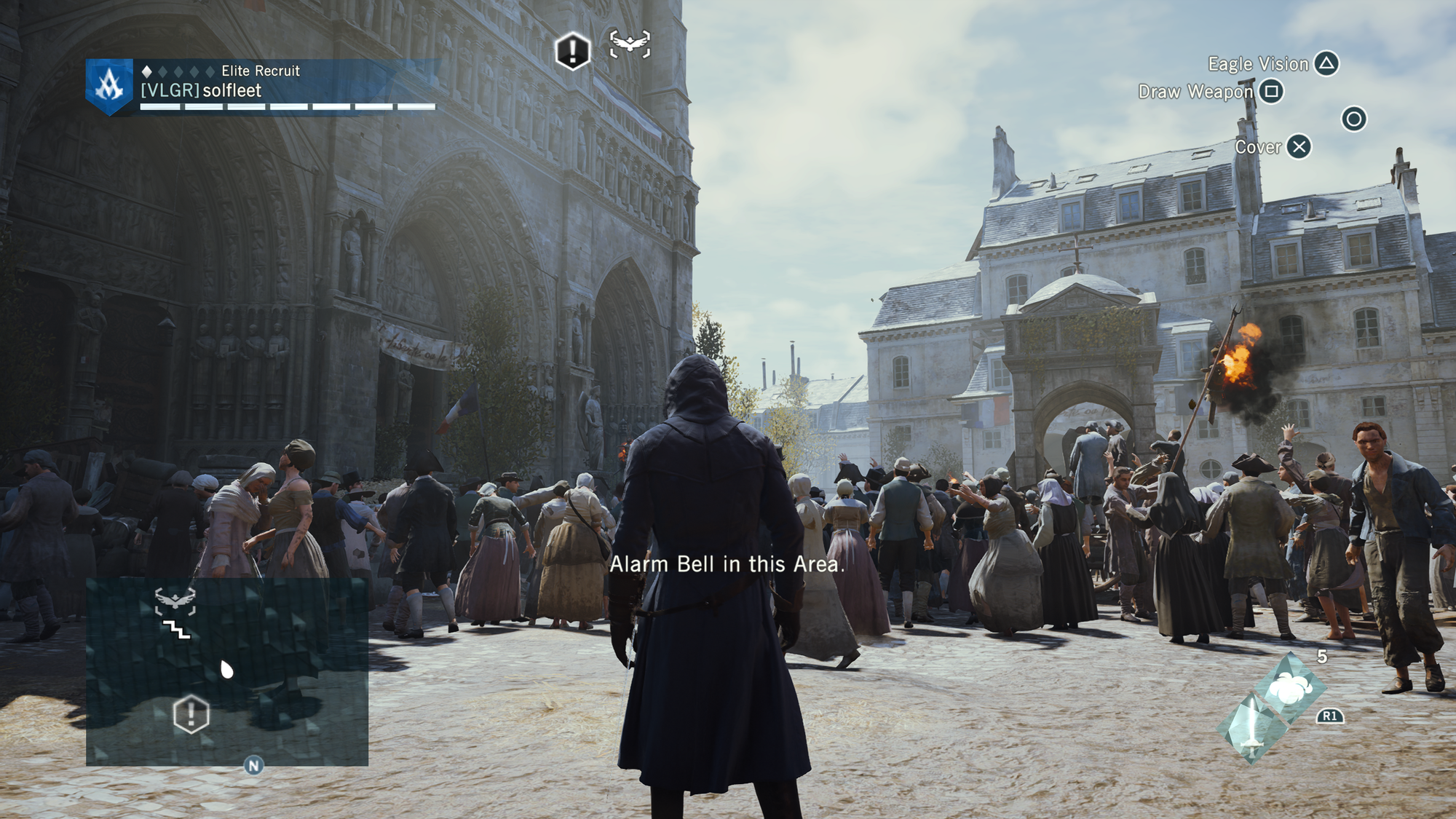
But the density of its world doesn't just work on a mechanical level, but a thematic one too. Despite launch issues, there's some truly impressive tech underneath the hood of Unity, letting the game hit crowd sizes that it's never been able to since. The streets of Paris are absolutely busting at all hours of the day, and there are incredible details and emergent events crammed into the game.
My favorite part here is how you can see, almost feel, the city shifting and changing alongside the revolution. You stumble upon book burnings, protests, and secret meetings. Find graffiti plastered all over the walls. There's even an enemy type that the game tells you are Agitators, paid by the Templars to harass and attack the citizens, in an effort to crush dissent. You can see these Agitators breaking up crows everywhere, and they're more than happy to attack you as well.
There's a kind of cacophonic chaos to the city at all times, which creates the perfect excuse for an Assassin to work. The key difference with Unity and later games is that Paris isn't just a place filled with interesting things to do; it's a city that feels alive on its own, a machine trudging along regardless of what you do. Later games, even Shadows, have worlds that feel like theme parks – where you go on a tour to see and do everything, rather than really, truly, interacting with the world.
And a big part of why Unity feels that way is the brilliant parkour, which I'm not afraid to say is the best the series has ever seen. I'm honestly blown away that no other game has managed to nail that feel again. By giving you a single dedicated freerunning button and then tying ascending and descending to two other buttons, Unity lets you effortlessly move through the city. But there's also superly smart level design that opens up the interior of so many different buildings, letting you run through a house during a chase, slide under a fruit stall, or go careening down a building with only one button. The parkour in Unity is designed not just to feel good in the moment, but to directly integrate with the design of the world and the architecture of the time period – thus enriching it even more.
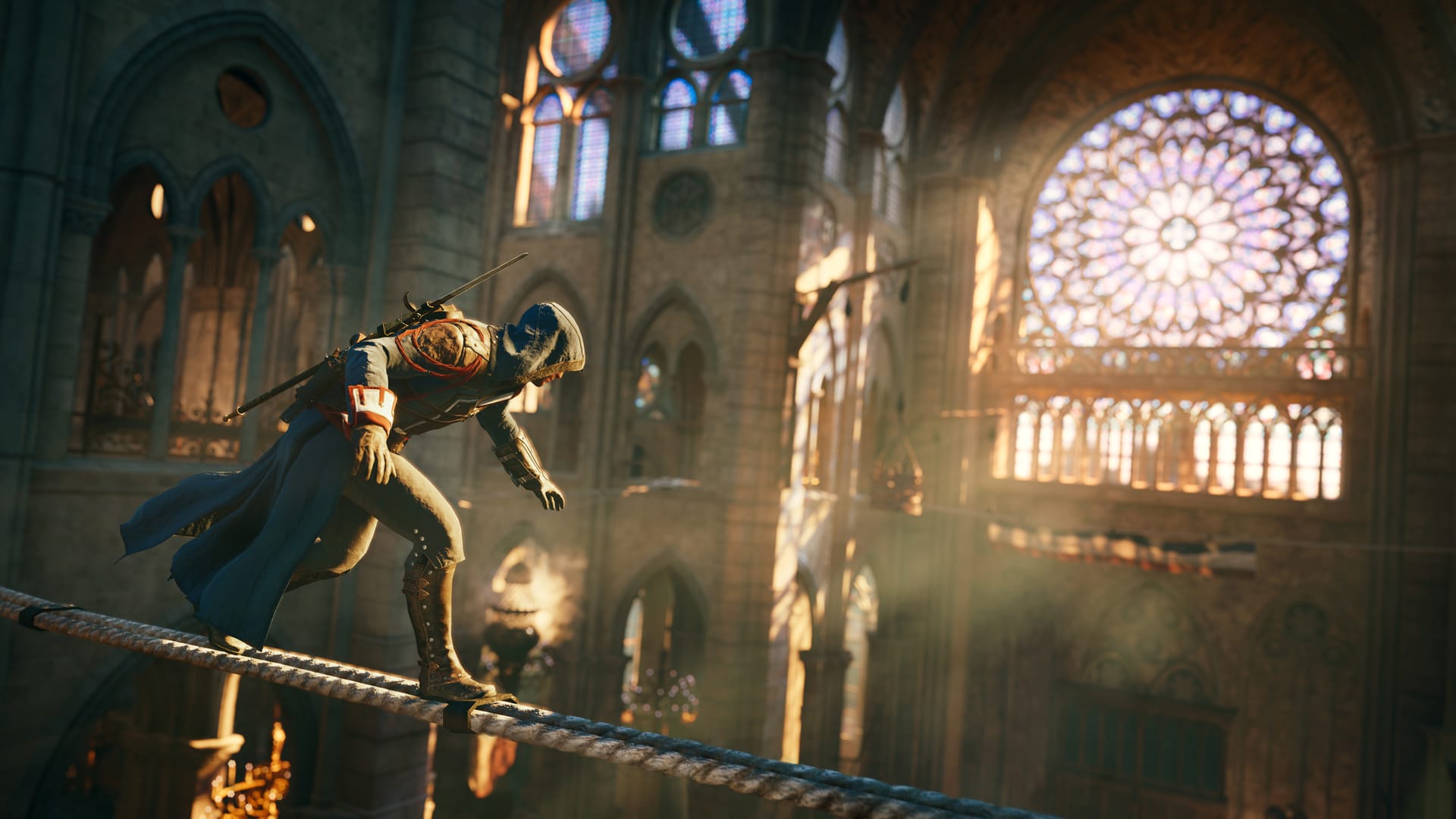
That's a hyper-specific piece that I don't think Assassin's Creed has managed to nail since. But all these elements of Unity coming together are what make it special. It's a compact and focused Assassin's Creed, obsessed with delivering on that historical fantasy. And the biggest mistake the series has made since is trying to widen that scope, letting players explore entire countries or continents, while also trying to add even larger, more supernatural stakes to the story.
And ultimately, I think the reason for that was a severe overcorrection on Ubisoft's part from Unity. I do remember covering the game and the deluge of often deserved criticism. The game was undeniably a technical mess at launch and needed significant work because the series had to have a yearly release, and Unity simply wasn't ready. There is a certain kind of messiness to how a lot of systems in Unity are implemented, and its story pacing as well – things that could have also been improved upon with more dev time and iteration. I often wonder how much different Assassin's Creed might look if Unity were given the time and space it deserved.
But ultimately, the only thing we can do is look back and examine Unity for the fascinating relic that it was – the overflowing ambition it had to refine the series' historical playground approach. If you never went back to Assassin's Creed Unity, I sincerely hope you give it another chance and take time to really sit with the game and unpack what it's trying to do. You might just discover something new.